Recommended Repair Bushing Specifications & Geographic Supply
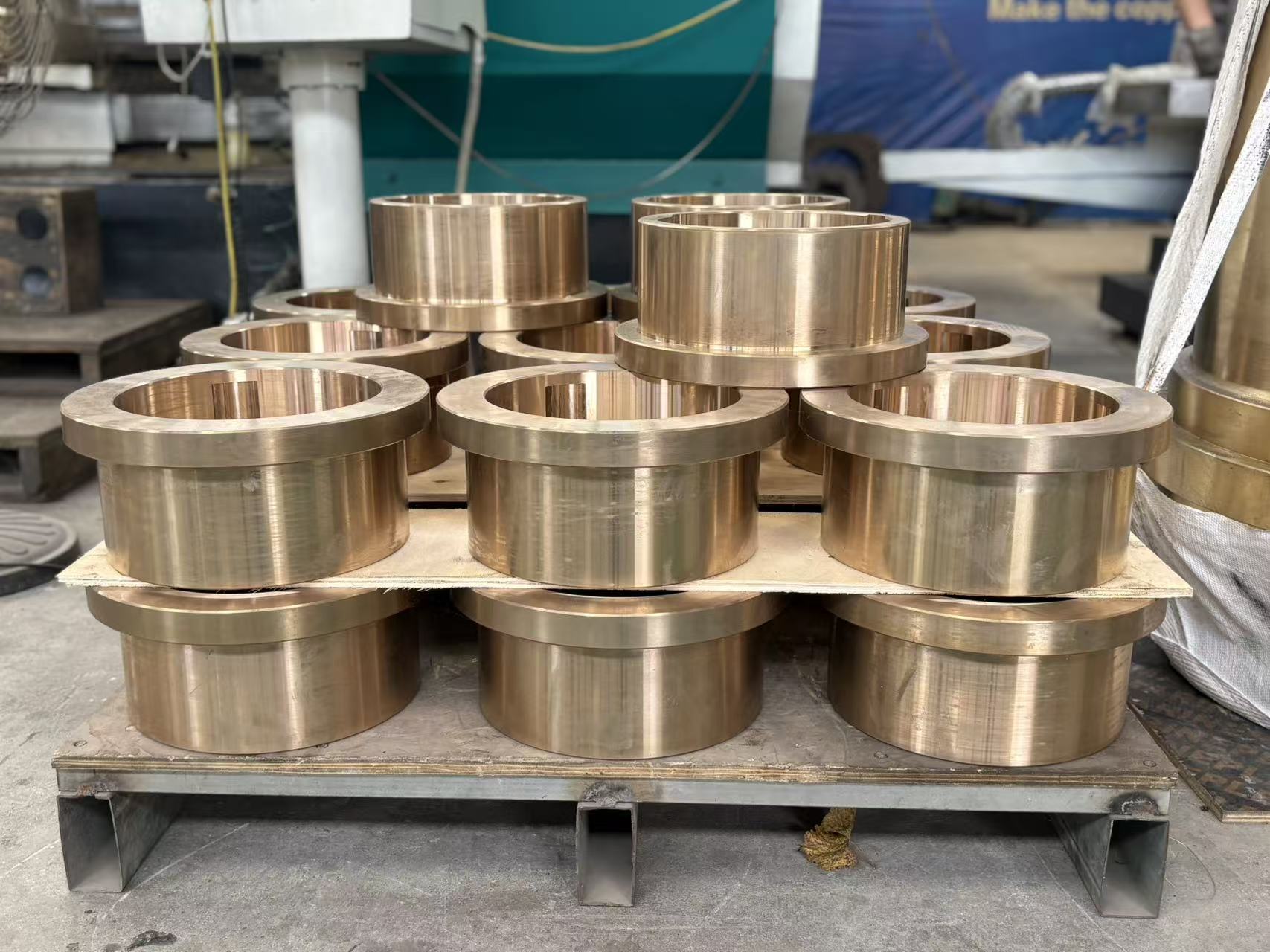
ZCuSn10P1 Centrifugal Cast Bushing: ID φ30–φ400 mm, OD increased by 5–8 mm, length ≤500 mm. Quick-delivery blanks (48 hours) available from foundries in Ningbo and Wuxi (Yangtze River Delta). Recommended for mining ball mills and extruder screw supports.
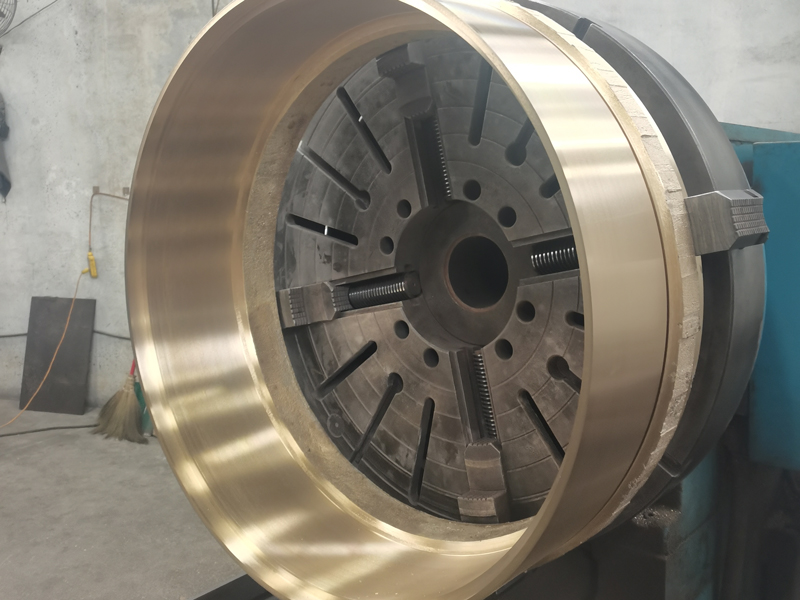
ZCuAl10Fe3 Aluminum Bronze Bushing: ID φ50–φ300 mm, suitable for heavy-load, low-speed applications such as rolling mill screw-down devices. Suppliers in Shandong and Hebei offer 3–5 day delivery with on-site surveying.
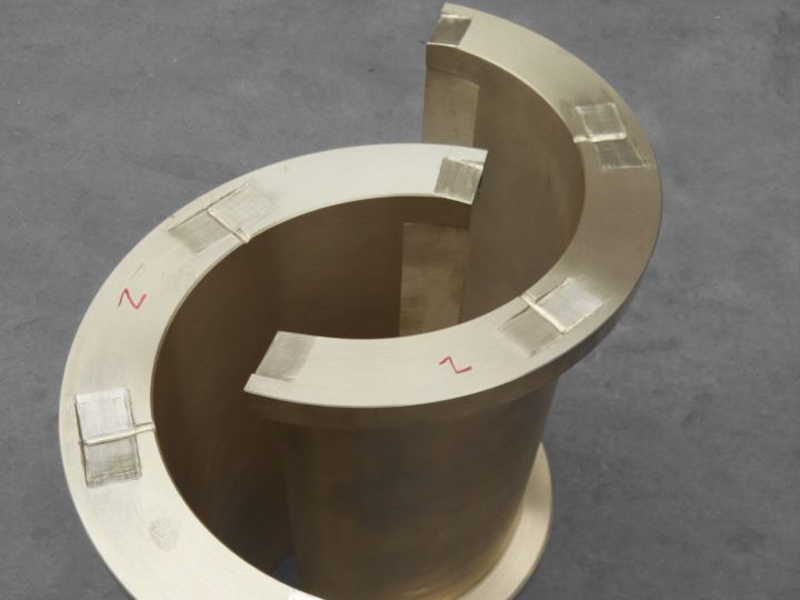
Split-Type Two-Piece Bushing: ID φ80–φ250 mm, bolted construction allowing clearance adjustment. Stock available in the Pearl River Delta region, suitable for paper machine dryer cylinders and rotary kiln support rollers.
Detailed Repair Methods
Method 1: Replace with Oversized Bushing
Enlarge the original housing bore by 2–4 mm, then press-fit a new bushing with a correspondingly larger OD. Ensure an interference fit of 0.02–0.05 mm between the new bushing OD and the housing bore. Suitable when the original bushing is severely worn or cracked.
Method 2: Insert Lining (Most Common)
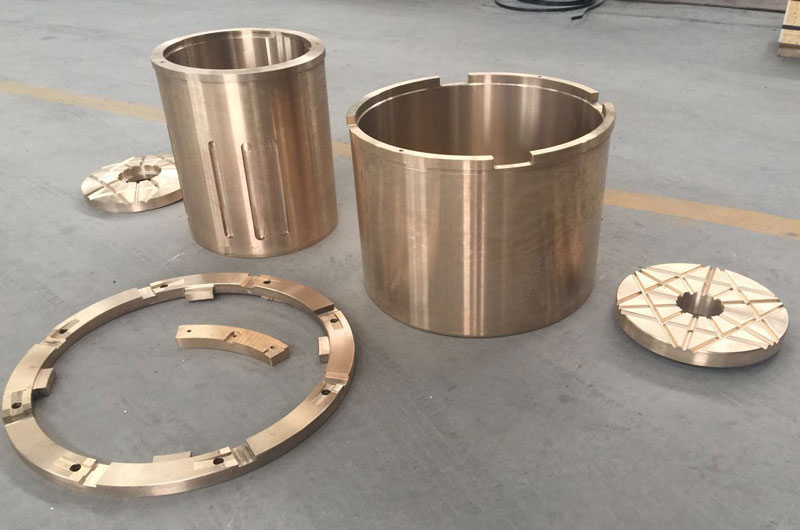
Bore out the worn bushing inner diameter by 0.5–1.0 mm per side, then machine and press-fit a thin-walled liner. The liner material can be ZCuSn5Pb5Zn5 with a wall thickness of 2–4 mm. This method retains the original bushing body and costs only 40%–60% of full replacement. Ideal for large marine rudder bearings and turbine guide vane bushings.
Method 3: Brush Plating (Electrochemical Repair)
For clearances under 0.20 mm, brush-plate copper or nickel-based alloy onto the journal surface, then grind to restore dimensional tolerance. Single-side coating thickness up to 0.3 mm, hardness HRC 35–45. No bushing removal required. Commonly used for emergency field repairs, such as wind turbine pitch bearing bushings.
Method 4: Adjustable Eccentric Bushing
Rotate the inner and outer eccentric rings to vary radial clearance within 0–0.5 mm. Suitable for equipment with frequent starts and varying load directions, such as punch press crankshaft connecting rod bushings.
Material Selection Guide
Choose repair bushing material based on service conditions:
High speed, light load (linear velocity >5 m/s): ZCuSn10P1 (10% tin), good anti-seizure properties.
Heavy load, low speed (pressure >30 MPa): ZCuAl10Fe3, hardness HB 140–160.
Corrosive media (seawater, acidic fluids): ZCuSn10P1 or ZCuSn12Ni2 mandatory.
Critical dimensional fit parameters after repair:
Recommended clearance: 1‰–2‰ of shaft diameter (for speeds <500 rpm).
Roundness and cylindricity tolerances ≤ half the diameter tolerance.
Supplier process verification: Request proof of centrifugal casting; sand cast bushings have higher internal porosity and risk premature failure after repair.
Future Planning for Copper Cast Alloy Components (2026–2030)
To address bushing clearance issues, the industry is moving toward "self-compensating wear-resistant bronze bushings." For example, solid lubricants (graphite or molybdenum disulfide) are embedded in the copper matrix; when clearance increases to a set value, the lubricant releases to form a solid lubricating film. Additionally, 3D printing of custom-shaped bushings is emerging for non-standard repairs, achieving material utilization over 90%. On the inspection side, handheld laser clearance measuring devices (accuracy ±0.005 mm) will become common for early warning. For traditional repair methods, insert lining will remain dominant, but combined with ultrasonic burnishing technology, compressive stress on the liner surface can increase fatigue life by approximately 30%.
Regional Industry Features & Field Services
Yangtze River Delta: On-site surveying and rapid bushing repair services, equipped with boring machines and pressing tools, response time 12–24 hours.
Pearl River Delta: Large inventory of standard semi-finished bushings (ID with 0.5 mm machining allowance), same-day pickup available.
Bohai Rim Region: Specializes in on-site built-up welding repair of large bushings (OD >600 mm) using aluminum bronze welding wire, without complete shaft disassembly.
Southwest Region: For hydropower turbine units, provides "boring + insert lining" turnkey service, construction period about 7 days.
Installation & Acceptance Key Points
Before pressing in a new bushing, coat the housing bore with molybdenum disulfide grease to prevent galling.
After repair, use red lead powder to check contact area; require at least 4 contact points per square inch.
During trial operation, monitor the bushing outer wall temperature; temperature rise should not exceed ambient +40°C.
For insert lining repairs, install dowel screws (M6–M10, spaced at 120°) between the liner and the mother bushing to prevent relative rotation.
Conclusion
Excessive shaft-to-bushing clearance does not necessarily require complete scrapping. Depending on the clearance amount, application criticality, and maintenance window, an appropriate solution can be chosen from insert lining, brush plating, or full replacement. With suitable materials and processes, combined with proper installation and acceptance procedures, a repaired fit can achieve 80%–95% of the original bushing life. It is recommended that enterprises establish a regular bushing clearance inspection schedule and intervene for repair when clearance exceeds 1.5 times the design upper limit, thereby avoiding secondary damage such as journal wear.