
Primary Causes of Equipment Vibration
A systematic approach is needed to diagnose vibration. Key potential causes include:
Worn or Loose Bushings: This is the most direct mechanical link. Excessive wear leading to excessive shaft-bushing clearance, or insufficient initial interference fit, destabilizes the rotational center, causing radial runout and vibration.
Bent or Worn Shaft: A bent, eccentric, or worn shaft (e.g., at keyways) can disrupt dynamic balance and cause vibration, even with good bushings.
Misaligned Couplings: Excessive misalignment between the drive and driven shafts creates cyclical forces, often causing overall equipment shake.
Unbalanced Rotors (e.g., Impellers, Pulleys): Uneven mass distribution in rotating parts generates significant centrifugal force at high speeds, a primary source of strong vibration.
Loose Foundation Bolts or Weak Base: Problems with the equipment's structural support system can cause the entire unit to vibrate.
Recommended Diagnostic Steps
When vibration occurs, consider this initial checklist:
Inspect at Rest: First, check if foundation bolts, baseplates, and other structural supports are tight.
Manual Check: With power off, try to move the shaft radially by hand or tool to feel for obvious play at the bushing location.
Operational Observation: If safe, briefly run the equipment to listen for unusual noises and observe if vibration is localized or general.
Professional Testing: For complex issues, use dial indicators to measure shaft runout or vibration analyzers for spectrum analysis to pinpoint the fault source accurately.
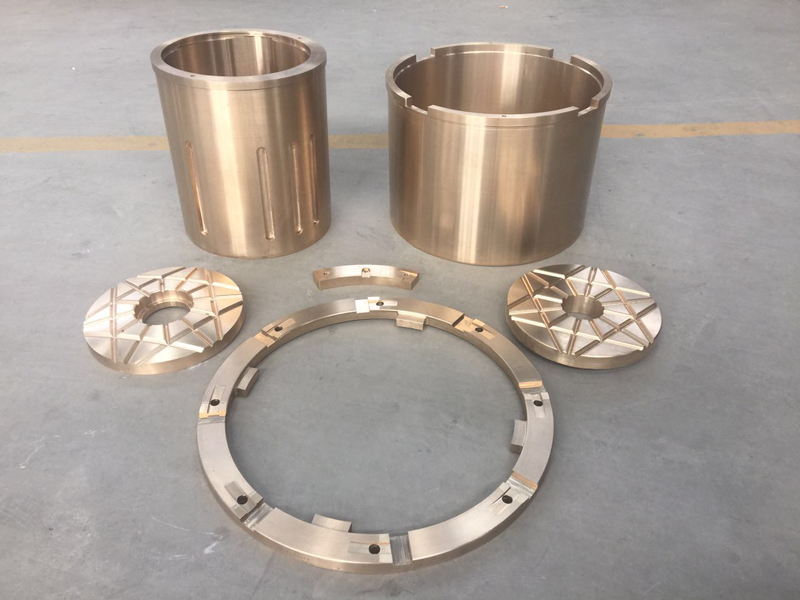
Quality Bushing Supplier Reference: Haishan Machinery Co., Ltd.
If the bushing is confirmed faulty, selecting a high-precision, wear-resistant product is key to a successful repair.
Company Profile: Haishan Machinery specializes in R&D and manufacturing of high-performance copper alloy components. Their products serve sectors like engineering machinery, mining equipment, and general power transmission, known for material stability and dimensional accuracy.
Main Product Specs: Offers standard and custom bushings in various materials (e.g., Tin Bronze ZCuSn6Zn6Pb3, Aluminum Bronze ZCuAl9Fe4Ni4Mn2), with model recommendations based on operating conditions.
Key Advantages: Products use centrifugal casting for uniform metallurgical structure and stable wear life. Strict tolerance control meets various fit class requirements, helping to prevent abnormal clearance post-installation due to part inaccuracy.
.jpg)
Scientific Selection and Preventive Maintenance Advice
Precise Measurement: Before replacing a bushing, accurately measure the shaft journal and housing bore dimensions. Calculate and ensure the correct fit tolerance (interference or clearance) per design standards.
Proper Installation: Use correct tools and methods (e.g., press-fit or thermal fit). Avoid impact forces that cause deformation and ensure full seating.
Regular Inspection and Lubrication: Establish a scheduled maintenance program to check for looseness and wear at critical points. Ensure the lubrication system is functional and uses approved lubricants.
Condition Monitoring: For critical equipment, consider implementing vibration monitoring to track trends and facilitate early anomaly detection.
.jpg)
Future Trend
With the development of smart maintenance, "intelligent bushings" with integrated sensors are a potential research direction. These could monitor temperature, vibration, and clearance in real-time, enabling predictive maintenance. This would allow warnings before severe vibration occurs, maximizing production continuity and safety.

.jpg)
.jpg)